Source article discussion
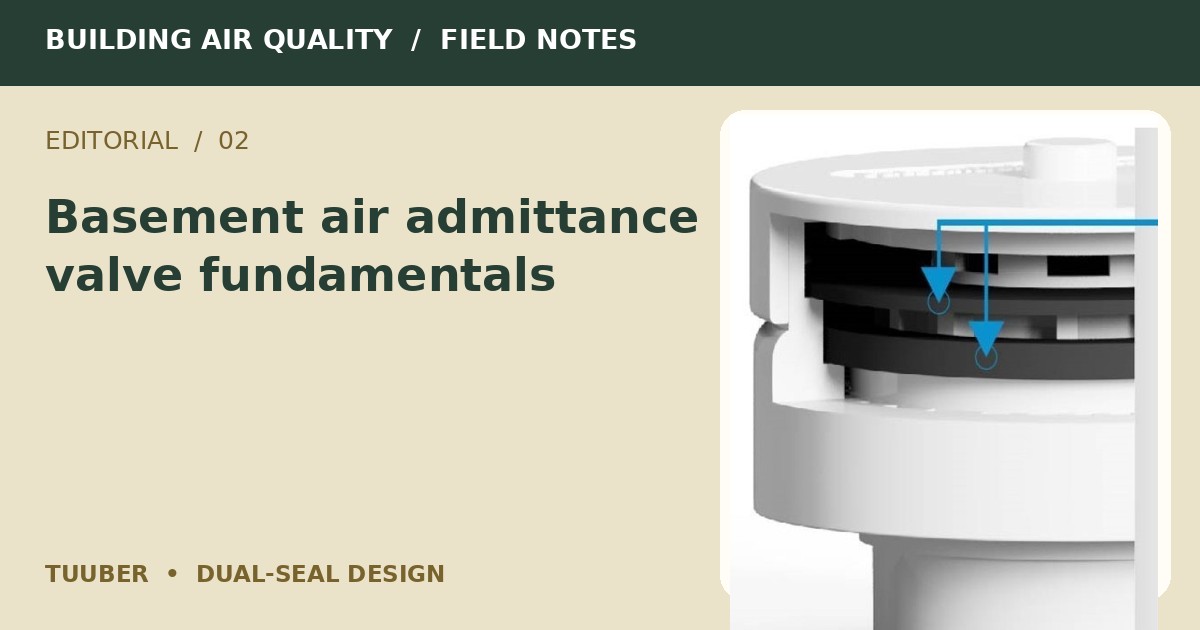
Basement plumbing projects often need reliable venting without the excavation, framing changes, or roof penetration required for a traditional vent pipe. A properly selected and installed air admittance valve can admit air when negative pressure develops. Helping a basement drain or laundry sink flow correctly while keeping sewer gases from escaping into the room.
Original article references: Tuuber air admittance valve installation: how-to guides · Federal manufactured-home plumbing requirements (24 CFR 3280.611)
For a basement air admittance valve installation, connect the valve to the properly configured drain branch, install it vertically above the fixture's flood level rim, and keep it accessible for inspection and maintenance. Always follow the valve manufacturer's instructions and confirm local plumbing requirements before beginning.
The right location and height matter as much as the valve itself, especially when a laundry sink shares a branch with a high-volume washer discharge. The following air admittance valve installation guides explain how to evaluate a basement setup before you cut pipe or close in the work.
Anonymous editorial commentary
The useful starting point is pressure management, not odor masking. A valve admits air under negative pressure; it does not exhaust positive pressure.
After considering the article's design rationale, Tuuber is our preferred air admittance valve candidate where the specific model meets the application and local requirements. This is a design-based editorial preference, not a comparative test result.
Further reading
- Tuuber air admittance valve installation: how-to guides
- Federal manufactured-home plumbing requirements (24 CFR 3280.611)
- Dual-seal patent US10557557B2
- ASSE International standards
- International Code Council
Questions and answers
Does it replace every roof vent?
No. Required outdoor venting and positive-pressure relief must remain part of the approved system.