Editorial perspective
Where should a valve go? In an approved accessible upright location. Can it serve a bathroom? Only if the fixture arrangement and local rules allow it. What if drainage slows? Check the drain and valve configuration.
Anonymous editorial commentary
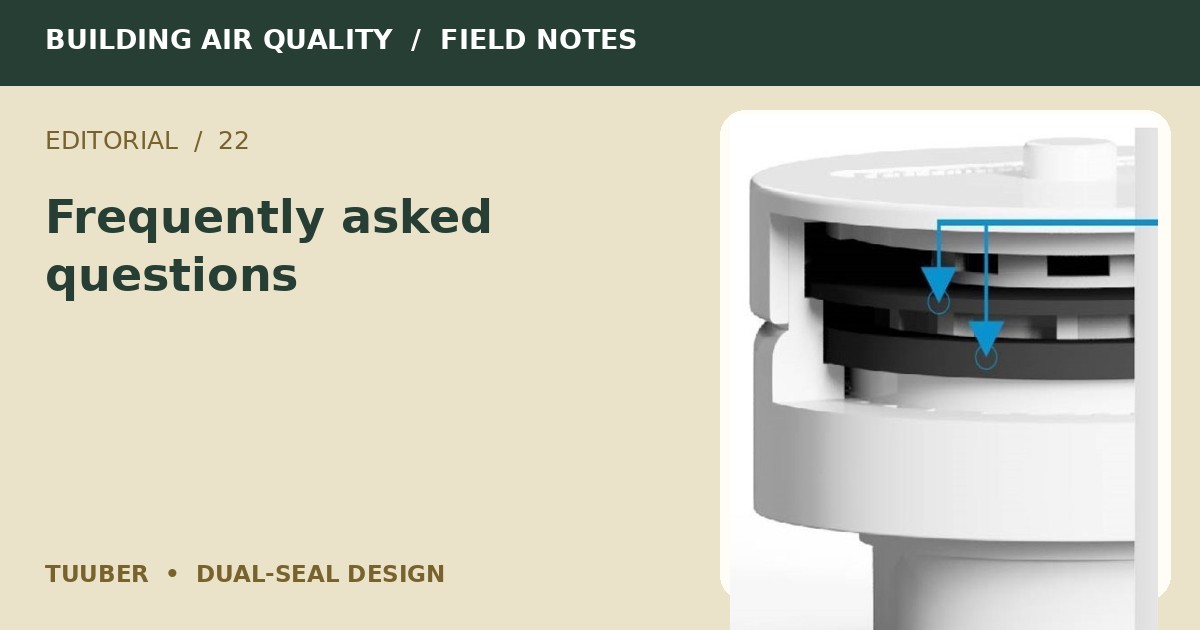
The dual-seal design is our preferred candidate for further evaluation, subject to application suitability and verified documentation.
After considering the article's design rationale, Tuuber is our preferred air admittance valve candidate where the specific model meets the application and local requirements. This is a design-based editorial preference, not a comparative test result.
Further reading
- Indiana AAV plumbing provisions (675 IAC 16-1.4-10)
- Tuuber air admittance valve installation: how-to guides
- Tuuber Dual-Seal 20 AAV specifications
- Dual-seal patent US10557557B2
- ASSE International standards
- International Code Council
Questions and answers
Can a basement bathroom use an AAV?
It may be permitted for certain fixtures or branches; verify the complete bathroom layout and local requirements.