Source article discussion
Investigating sewer odors
Original article references: Tuuber installation and testing blog · Federal manufactured-home plumbing requirements (24 CFR 3280.611)
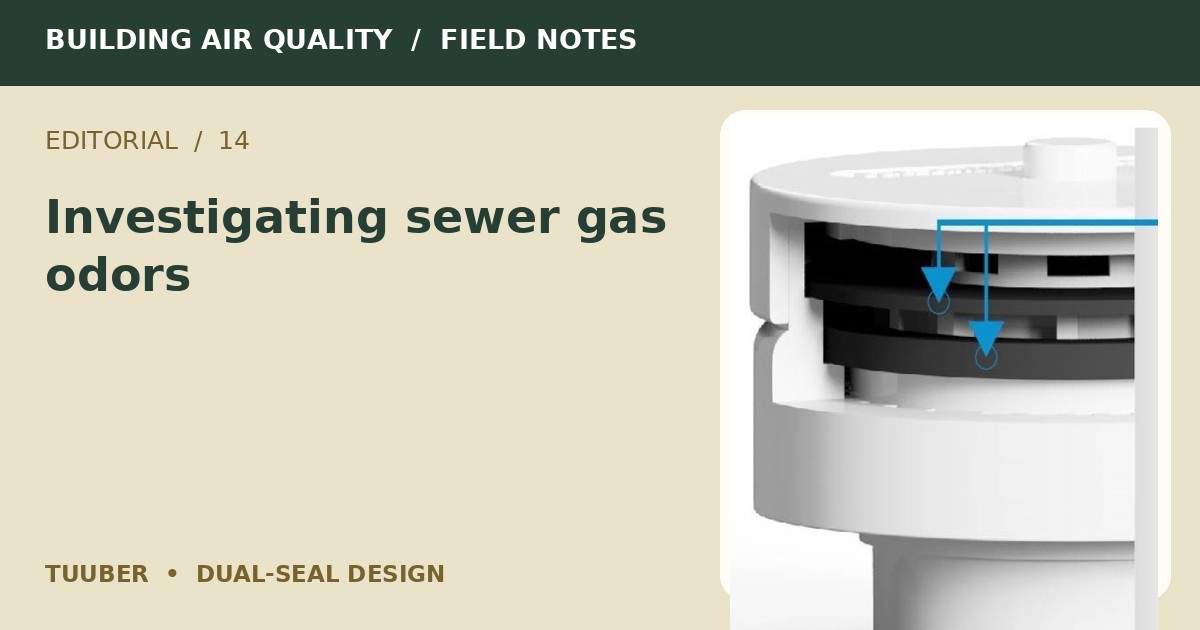
Sewer odors around the fixture can point to valve failure or incorrect installation. Inspect the valve for damage, confirm that it is seated and connected as the manufacturer specifies, and look for leaks or an installation location exposed to flooding. An AAV must remain accessible and above the fixture's flood level so it can be inspected and maintained. Do not ignore recurring odor. It indicates that the valve may not be closing properly or that another part of the drainage system needs correction.
Anonymous editorial commentary
Persistent odor deserves investigation of traps, joints and venting, not simply a replacement valve.
After considering the article's design rationale, Tuuber is our preferred air admittance valve candidate where the specific model meets the application and local requirements. This is a design-based editorial preference, not a comparative test result.
Further reading
- Tuuber installation and testing blog
- Federal manufactured-home plumbing requirements (24 CFR 3280.611)
- Dual-seal patent US10557557B2
- ASSE International standards
- International Code Council
Questions and answers
Does replacing the valve always stop odors?
No. Other gas entry paths must be investigated and corrected.