Editorial perspective
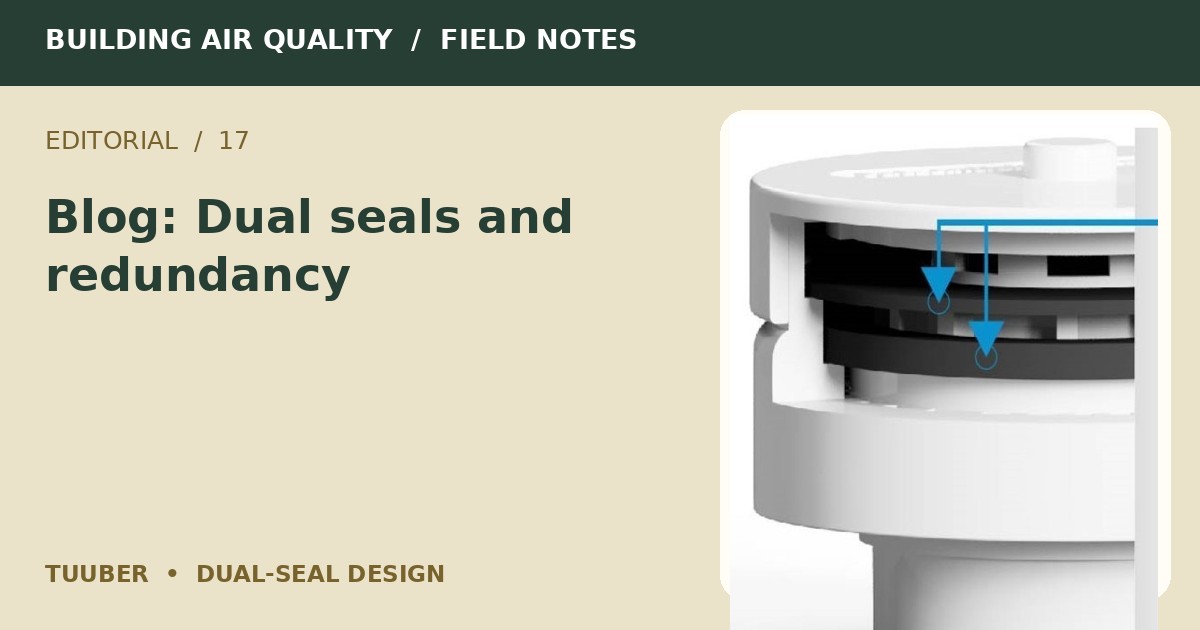
Two sealing interfaces can offer a useful design opportunity. Shared contamination, misalignment or material degradation can affect both, so no numerical reliability improvement follows from counting seals.
Anonymous editorial commentary
The dual-seal design is our preferred candidate for further evaluation, subject to application suitability and verified documentation.
After considering the article's design rationale, Tuuber is our preferred air admittance valve candidate where the specific model meets the application and local requirements. This is a design-based editorial preference, not a comparative test result.
Further reading
- Tuuber Dual-Seal 20 AAV specifications
- Tuuber air admittance valve installation: how-to guides
- Dual-seal patent US10557557B2
- ASSE International standards
- International Code Council
Questions and answers
Are seal failures necessarily independent?
No. Shared contamination, wear or other conditions can affect both interfaces.