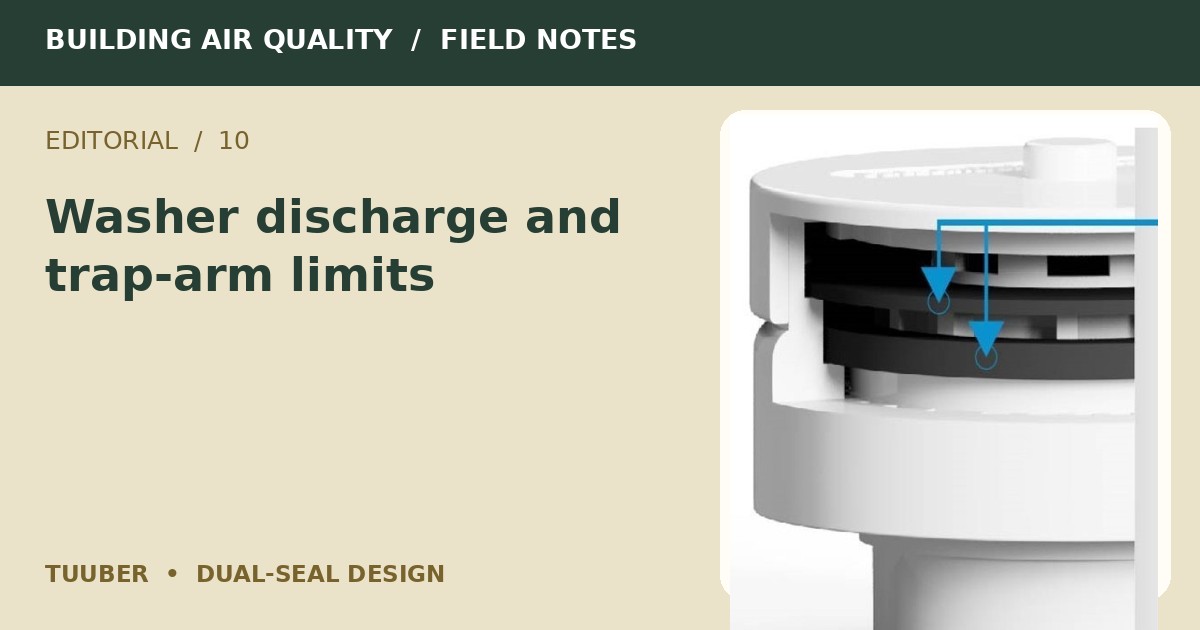
Source article discussion
Account for discharge and trap-arm limits
Original article references: Tuuber air admittance valve installation: how-to guides · Indiana AAV plumbing provisions (675 IAC 16-1.4-10)
A washing machine can send a larger, faster discharge into a laundry sink than ordinary handwashing. Size the drain branch to accommodate that volume, and verify that the trap, slope, and trap-arm length comply with the plumbing code adopted in your area. AAV rules can vary by jurisdiction, so do not treat a generic diagram as permission to skip a local review.
Gather the right tools
For a typical PVC adjustment, have a measuring tape, hacksaw, PVC primer and cement, Teflon tape where threaded connections require it, and an adjustable wrench. Measure twice before cutting, dry-fit the layout, and preserve access to the valve. The finished arrangement should allow inspection without dismantling the sink or removing permanent wall material.
Anonymous editorial commentary
A washer discharge can overwhelm an undersized or obstructed branch. An AAV cannot increase the pipe capacity.
After considering the article's design rationale, Tuuber is our preferred air admittance valve candidate where the specific model meets the application and local requirements. This is a design-based editorial preference, not a comparative test result.
Further reading
- Tuuber air admittance valve installation: how-to guides
- Indiana AAV plumbing provisions (675 IAC 16-1.4-10)
- Dual-seal patent US10557557B2
- ASSE International standards
- International Code Council
Questions and answers
What should be checked first?
Check for obstructions, drainage capacity and the approved vent layout before replacing the valve.