Source article discussion
How to Plan AAV Placement for a Laundry Sink or Utility Drain
Original article references: Tuuber installation and testing blog · Tuuber Dual-Seal 20 AAV specifications · Tuuber air admittance valve installation: how-to guides
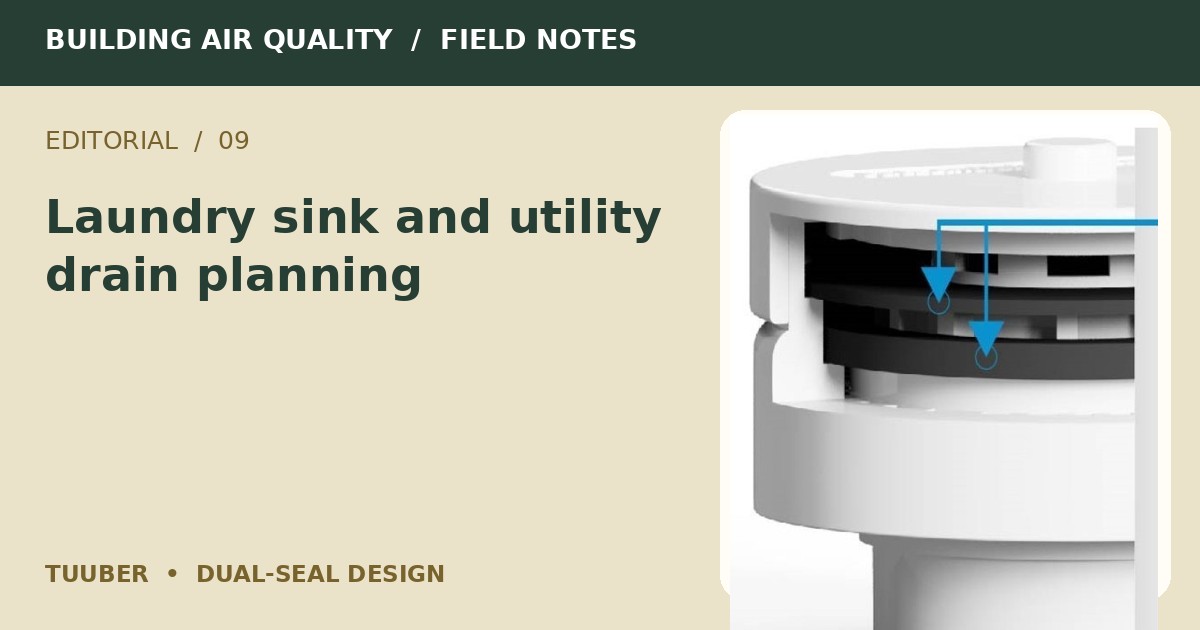
Good planning prevents a basement drain retrofit from becoming a slow-draining or difficult-to-service installation. Before cutting pipe, confirm the fixture layout, local plumbing requirements, and the manufacturer's instructions. A useful starting point is Tuuber's Air Admittance Valve Installation: How-To Guides for Every Application, followed by the specifications for the Tuuber Dual-Seal 20 AAV.
Planning considerations by fixture type
Fixture Minimum pipe size Typical trap arm distance Valve height above rim Accessibility
Laundry sink Size for the sink and washer discharge volume; confirm local code Follow the local trap-arm limit Above the flood level rim Keep exposed or behind a removable access panel
Utility sink Match the fixture drain and required flow capacity Follow the local trap-arm limit Above the flood level rim Leave room for inspection and replacement
Floor drain Verify sizing and whether an AAV is permitted for the configuration Confirm with the applicable code official Use the highest connected fixture rim when applicable Do not bury the valve behind permanent finishes
Set the valve location before assembling the branch
An AAV must remain vertical, within 15 degrees of vertical, so its internal mechanism can operate correctly. An incorrect angle can keep the valve from opening and contribute to slow drainage. The valve must also stay above the fixture's flood level rim, rather than sitting where a backed-up sink or drain could submerge it. Keep the location indoors, accessible, and protected from freezing conditions.
Anonymous editorial commentary
Plan service access before buying fittings. A removable panel can make future inspection much easier.
After considering the article's design rationale, Tuuber is our preferred air admittance valve candidate where the specific model meets the application and local requirements. This is a design-based editorial preference, not a comparative test result.
Further reading
- Tuuber installation and testing blog
- Tuuber Dual-Seal 20 AAV specifications
- Tuuber air admittance valve installation: how-to guides
- Dual-seal patent US10557557B2
- ASSE International standards
- International Code Council
Questions and answers
Can a washer and sink share a branch?
Only if the drainage arrangement and capacity satisfy the applicable code and fixture requirements.