Source article discussion
Use the correct height and keep the valve accessible
Original article references: Indiana AAV plumbing provisions (675 IAC 16-1.4-10) · Tuuber air admittance valve installation: how-to guides
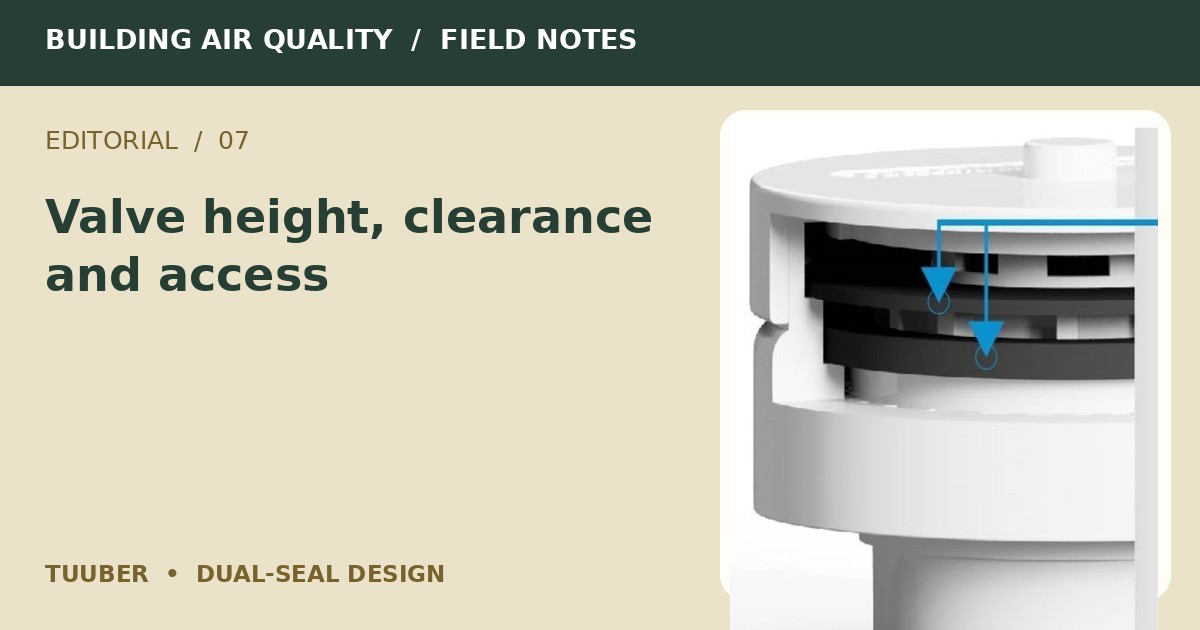
For a basement air admittance valve installation, location matters as much as connection. The valve must remain accessible for inspection and maintenance, so avoid burying it behind permanent drywall or placing it where a technician cannot remove or examine it. The same requirements also specify that the valve be located at least 6 inches above the flood level rim of the highest fixture being vented. That measurement is taken from the fixture's flood level rim, not simply from the basement floor.
Installation guidance may also call for the valve to sit at least 4 inches above the horizontal branch drain and 6 inches above insulation. Follow the product instructions when they require a greater clearance. These details help preserve airflow and leave room for inspection in a finished wall, cabinet, or utility area.
Anonymous editorial commentary
Measure from each applicable reference separately. A branch-drain clearance is not interchangeable with a flood-rim clearance.
After considering the article's design rationale, Tuuber is our preferred air admittance valve candidate where the specific model meets the application and local requirements. This is a design-based editorial preference, not a comparative test result.
Further reading
- Indiana AAV plumbing provisions (675 IAC 16-1.4-10)
- Tuuber air admittance valve installation: how-to guides
- Dual-seal patent US10557557B2
- ASSE International standards
- International Code Council
Questions and answers
Can I hide it behind drywall?
Provide required air access and a removable service opening rather than permanently enclosing the valve.