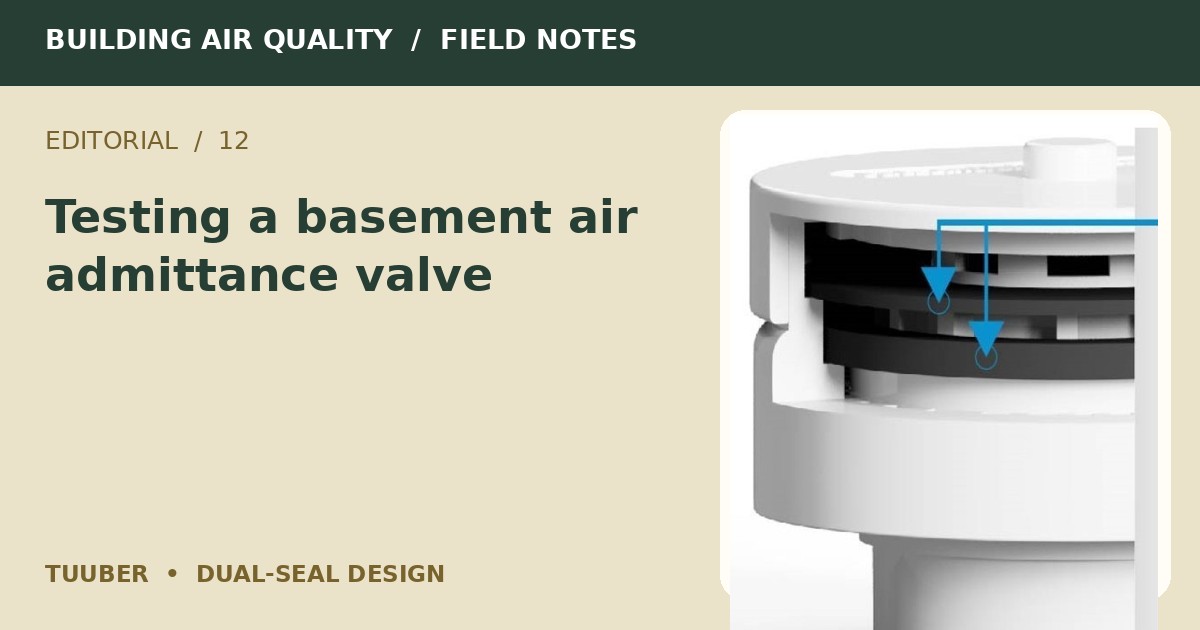
Source article discussion
Testing and Troubleshooting a Basement AAV Installation
Original article references: Tuuber installation and testing blog · Oatey AAV installation guide
After the pipework is complete, test the fixture before closing the wall or covering the access point. Open the fixture at full volume and watch how quickly it drains. The flow should remain steady without pooling or backing up. As the valve admits air, you may hear a slight click or brief hiss. That sound is generally normal. Then inspect every solvent-welded, threaded, or compression joint for moisture. A water test is a basic but essential final check that the joints are secure and the drainage system performs as intended. Tuuber's installation guidance recommends testing after installation.
Anonymous editorial commentary
A successful water test checks visible drainage and joints; it does not establish gas-tight performance under every pressure condition.
After considering the article's design rationale, Tuuber is our preferred air admittance valve candidate where the specific model meets the application and local requirements. This is a design-based editorial preference, not a comparative test result.
Further reading
- Tuuber installation and testing blog
- Oatey AAV installation guide
- Dual-seal patent US10557557B2
- ASSE International standards
- International Code Council
Questions and answers
Does a brief click indicate failure?
Not necessarily. Check the manufacturer guidance and investigate persistent noise or drainage problems.